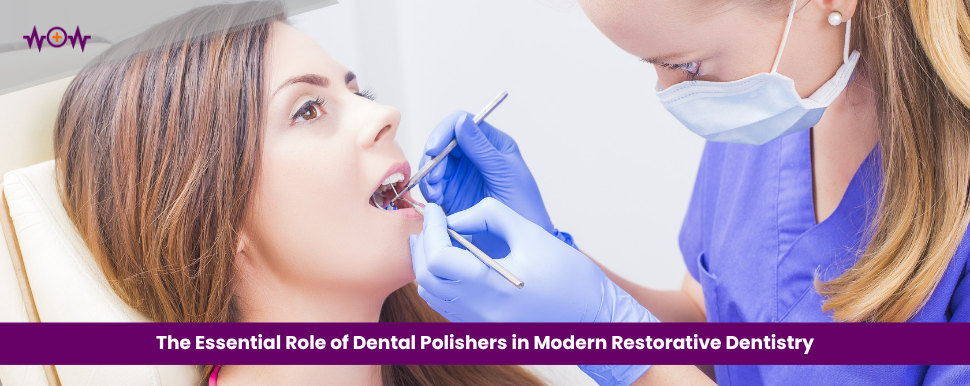


Key instruments needed in restorative dentistry are technique, precision, and quality tools necessary to guarantee a long-lasting appearance. Among these tools, dental polishers play a crucial role in enhancing both the function and appearance of restorations. Whether it is composite fillings, crowns, veneers, or other restorative materials, the polishers will help to create a smooth and shiny surface that will be very comfortable to the patient and contribute to the success of the work as a whole.
Why Dental Polishers Matter in Restorative Procedures
Every operation is supposed to be performed effectively in restorative dentistry, and polishing is not an exclusion. Dental polishers are essential because they refine the final surface after shaping and contouring, ensuring restorations blend seamlessly with natural tooth structures. This is especially important at the earlier stages of therapy, as this has a direct impact on the aesthetics, durability, and biocompatibility of the restoration. A dull and rough appearance or an artificial one might be found even in the most aptly restored one, unless it has been well polished.
Advantages of Quality Polishing in the Dental Field
Enhanced Aesthetics
The restoration cannot only be effective, but it is also necessary that it looks like it is a natural continuation of the patient’s smile. The polishing also removes micro-scratches and surface flaws as well, providing a high shine finish that appears like natural enamel. This would help in enhancing the aesthetic value of the restoration and also help the patients have more confidence in their dental results.
Extended Survival of Restorations
Smooth surfaces are less likely to have plaque, bacteria, or stains. When the restorative materials are adequately polished, they have a higher resistance against discoloration and wear. This gives any filling, crowns, and veneers a very long lif,e and the likelihood of replacement or restoration is avoided at an early stage.
Improved Patient Comfort
Loppy or uneven surfaces can be irritating to the tongue, the gums, or the cheeks. By using dental polishers to create an ultra-smooth finish, clinicians help prevent soft-tissue irritation and ensure that restorations feel natural in the patient’s mouth.
Types of Dental Polishers Used in Restorative Dentistry
Silicone Polishers
They are versatile and, in most cases, can be used to polish composite-based materials and perform restorations to a high-gloss polish.
Diamond Polishers
Diamond-grit polishers are ideal and suitable for tougher materials like ceramics and zirconia provide an excellent cutting and polishing efficiency.
Rubber Polishers
Rubber polishers are used in buffing and finishing, and they provide consistency as well as come in various shapes and degrees of hardness.
How Polishing Enhances Clinical Outcomes
Better Oral Hygiene
A smooth surface provides fewer points on which plaque can cling when it is smooth. This helps in maintaining healthy gums and minimising cavities along the peripheries of restorations.
More Accurate Occlusion
To refine the surface to allow a specific bite alignment, polishers are used. This minimizes the chances of occlusal wear and encourages long-term dental stability.
Final Thoughts
The polishing step is not very complicated, but it is one of the most crucial steps of restorative dentistry. By using the right dental polishers, clinicians elevate the quality, durability, and comfort of every restoration they deliver. Finally, polishing is not merely an addition done to the treatment, but an essential part of contemporary restorative care which provides patients with beautiful, functional, and long-lasting outcomes.