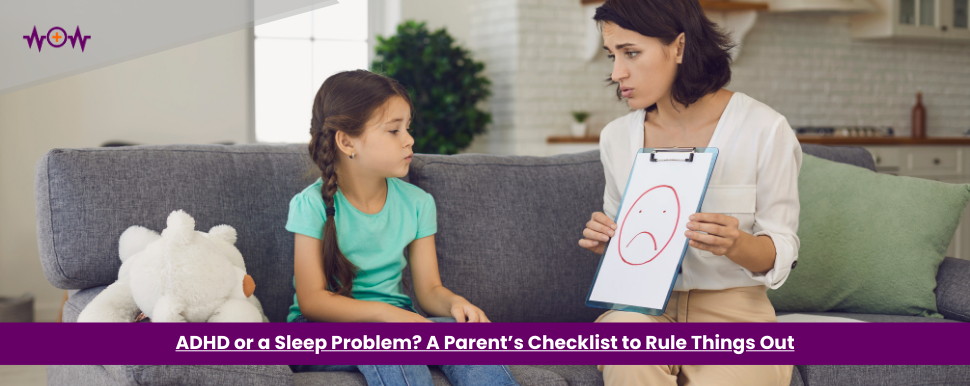


Your child is bright, curious, and capable. Yet lately, focus feels harder, at school and at home. Notes come home about attention. Mornings are rough. Bedtime is a battle. It’s easy to assume ADHD. However, sleep problems can look very similar in kids.
Before you jump to conclusions, it helps to rule out common sleep issues, especially pediatric sleep apnea. This guide gives parents a clear, practical checklist to spot sleep-related clues and plan smart next steps with a pediatrician.
What this covers
- ADHD‑like signs that can be sleep‑related
- Nighttime clues parents often miss
- A simple, step‑by‑step checklist for your next appointment
ADHD-like signs don’t always mean ADHD in kids
Many behaviors that raise ADHD concerns can also appear when sleep, routines, or stress are off. Kids don’t always look sleepy when they’re overtired. Instead, their brains may “rev up,” showing distractibility, impulsivity, or big emotions.
At school, this can look like unfinished work, frequent redirection, or calling out. At home, parents often notice bedtime resistance, forgetfulness, or intense reactions to small frustrations. None of this means your child has ADHD. It means there’s overlap, and it’s worth looking at sleep, too.
What it can look like at school
- Daydreaming or “zoning out”
- Trouble following multi‑step directions
- Impulsive talking or movement
- Irritability late in the day
What it can look like at home
- Difficulty settling at night
- Big emotions after school
- Forgetting routines or chores
- “Wired” at night, tired in the morning
For a baseline, the CDC outlines common ADHD signs in children. Notice how many of these can also show up when sleep isn’t restorative.
Sleep loss can mimic inattention, hyperactivity, and mood
When kids don’t get enough quality sleep, their behavior often changes fast. Instead of slowing down, many children become more active, impulsive, or emotionally reactive. In other words, overtired can look overactive.
Sleep debt can build quietly. A later bedtime here, an early wake‑up there, or anxiety at night can add up by midweek. Screens too close to bedtime and inconsistent schedules can make it worse. As a result, focus and mood may suffer even if total sleep time seems “okay.”
Fast clues your child may be sleep‑deprived
- Hard wake‑ups most school days
- Catch‑up sleep on weekends
- Afternoon meltdowns or irritability
- Falling asleep in the car
- Teachers noting afternoon focus dips
For a plain‑English breakdown, see the effects of sleep deprivation you should know. If these patterns sound familiar, it’s time to look deeper at why sleep isn’t doing its job.
Pediatric sleep apnea red flags parents often miss
Sleep apnea isn’t just an adult issue. In children, breathing pauses during sleep can disrupt oxygen and fragment rest. The daytime result isn’t always sleepiness, it’s often behavior and attention changes.
This overlap fuels confusion. Many families wonder whether challenges labeled as ADHD could actually be related to sleep‑disordered breathing. A deeper explanation of how sleep apnea can mimic ADHD symptoms can help you see where the lines blur.
Nighttime clues
- Loud snoring most nights
- Mouth breathing during sleep
- Pauses, gasping, or choking sounds
- Restless sleep or unusual positions
- Night sweats or frequent awakenings
Daytime clues
- Hyperactivity or impulsivity
- Irritability or aggression
- Trouble paying attention
- Morning headaches
- Bedwetting (in some children)
According to the NIH, sleep apnea symptoms in children can be subtle. If you notice breathing pauses, gasping, or significant daytime impairment, that’s a reason to talk with your pediatrician sooner rather than later.
A simple parent checklist before your next appointment
Tracking turns worry into useful information. You don’t need fancy tools, just consistency for one week. Aim for seven nights so patterns have time to show up.
7‑night tracking checklist
- Bedtime and wake time (school days vs. weekend)
- Time it takes to fall asleep
- Snoring or mouth breathing (yes/no)
- Restlessness or unusual sleep positions
- Number of awakenings (rough count)
- Morning mood and energy (1–5 scale)
- One school note per day (focus, behavior, fatigue)
Questions to ask your child
- “Do you feel tired at school?”
- “Do you wake up with a dry mouth or sore throat?”
- “Is it hard to pay attention after lunch?”
Keep it simple. A 60‑second note each morning is enough. This snapshot helps clinicians connect nighttime sleep with daytime behavior.
What evaluation can look like for kids
Start with your pediatrician. They’ll review growth, health history, sleep patterns, and school feedback. Bringing your 7‑night log makes the conversation clearer and more efficient.
Depending on what they see, next steps may include questionnaires, referrals, or discussing whether a sleep study is appropriate. Only trained professionals can diagnose ADHD or sleep apnea, and sometimes both conditions can exist together.
Bring this to the visit
- Your 7‑night sleep log
- Teacher notes or report excerpts
- A list of medications or supplements
- Family history of sleep or attention issues
The American Academy of Pediatrics explains how sleep apnea is detected and treated in children, which can help you understand what the process may involve.
Support better sleep while you’re getting answers
While you wait for evaluations, small changes can make days easier. Focus on basics first. Consistency matters more than perfection.
Quick wins for the next 7 days
- Keep the same wake time daily (within 30 minutes)
- Make the last hour before bed screen‑free
- Create a calm wind‑down routine (bath, book, dim lights)
- Keep the bedroom cool, dark, and quiet
- Avoid sugary snacks close to bedtime
- Note snoring and sleep position without trying to “fix” it
If you’re also learning about attention concerns, a plain‑English overview of ADHD in kids can provide helpful background while you gather sleep data.
Putting it all together
You’re not alone. Many families face the same question: ADHD, sleep, or both? Because sleep problems can look like focus problems, ruling out sleep is a smart first step.
Quick reminders
- Overtired kids may seem hyper or unfocused
- Track sleep for seven nights before the visit
- Snoring and breathing pauses are worth discussing
- A pediatrician can help guide next steps
This article is for general information only and isn’t a substitute for professional medical advice. If you’re concerned about your child’s sleep or behavior, talk with a healthcare provider who knows your child’s history.