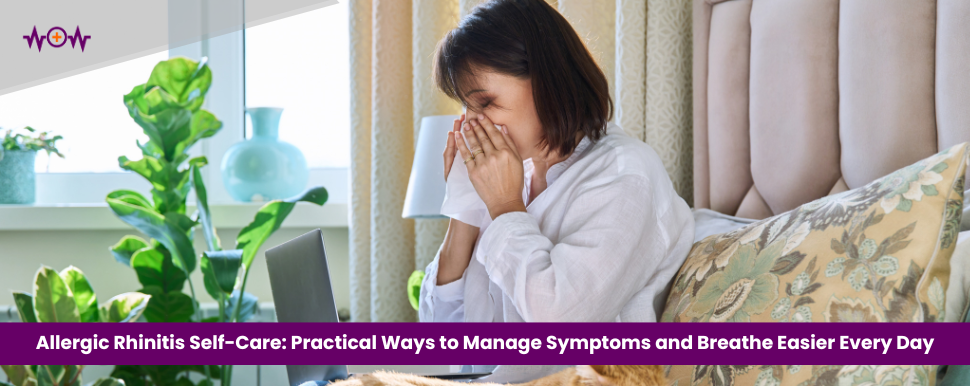


You wake up feeling refreshed and ready for the day.
The weather looks beautiful outside. The sun is shining. The air feels fresh. Everything seems perfect.
Then it starts.
One sneeze.
Then another.
A few minutes later, your nose begins running nonstop. Your eyes start itching. Your throat feels irritated. Before you even finish breakfast, you have gone through half a box of tissues.
Sound familiar?
Millions of people experience this exact situation every year. For many, these symptoms are not caused by a cold or flu. Instead, they are caused by allergies.
What makes the situation even more frustrating is that symptoms often return again and again. They affect sleep. They affect productivity. They affect concentration. And sometimes, they affect overall quality of life.
This is why more people are searching for effective allergic rhinitis self-care strategies than ever before.
The good news is that many allergy symptoms can be managed successfully with simple daily habits. While medical treatment may sometimes be necessary, self-care remains one of the most important tools for reducing discomfort and improving day-to-day life.
Understanding how to manage triggers, support your immune system, and create a healthier environment can make a significant difference.
In this guide, we will explore practical allergic rhinitis self-care techniques, discuss common triggers, and explain how proactive healthcare can help you stay ahead of allergy symptoms throughout the year.
What Is Allergic Rhinitis?
Allergic rhinitis is an allergic reaction that affects the nose and surrounding tissues.
It occurs when the immune system reacts to substances that are usually harmless. These substances are called allergens.
Common allergens include:
- Pollen
- Dust mites
- Mold spores
- Pet dander
- Grass
- Tree pollen
When exposed to these triggers, the body releases chemicals such as histamine.
As a result, symptoms begin to appear.
These symptoms may include:
- Sneezing
- Runny nose
- Nasal congestion
- Itchy eyes
- Watery eyes
- Itchy throat
- Postnasal drip
Although allergic rhinitis is not usually dangerous, it can significantly affect daily comfort.
Therefore, developing effective allergic rhinitis self-care habits is important.
Why Allergies Feel Worse Today
Many people feel their allergies are becoming more severe.
In some cases, they are right.
Longer allergy seasons, environmental changes, increased pollution, and greater allergen exposure may contribute to worsening symptoms.
Additionally, spending more time indoors can increase exposure to dust mites, mold, and pet allergens.
Because of this, allergy management has become a year-round concern for many individuals.
Fortunately, small changes often create meaningful improvements.
Know Your Triggers
One of the most effective forms of allergic rhinitis self-care is understanding your specific triggers.
Every person is different.
Some people react mainly to pollen. Others react to pets. Some experience symptoms primarily indoors.
Keeping a symptom journal can help identify patterns.
For example, ask yourself:
- When do symptoms occur?
- Where do symptoms worsen?
- What activities trigger reactions?
The answers often provide valuable clues.
Once triggers are identified, prevention becomes much easier.
Monitor Pollen Levels Regularly
If pollen is one of your triggers, awareness is essential.
Pollen counts can vary significantly from day to day.
Therefore, checking local pollen forecasts can help you plan outdoor activities more effectively.
On high-pollen days:
- Limit outdoor exposure when possible.
- Keep windows closed.
- Use air conditioning if available.
- Shower after spending time outside.
These simple habits are among the most effective allergic rhinitis self-care strategies for seasonal allergies.
Keep Indoor Air Clean
Many allergens enter the home without being noticed.
Dust, pollen, mold spores, and pet dander can accumulate quickly.
Because of this, maintaining indoor air quality becomes important.
Helpful practices include:
- Vacuuming regularly
- Washing bedding weekly
- Using high-quality air filters
- Cleaning curtains and upholstery
- Reducing indoor humidity
A cleaner indoor environment often results in fewer symptoms.
Additionally, consistent cleaning helps prevent allergens from building up over time.
Wash Away Allergens Before They Spread
Many people unknowingly carry allergens into their homes.
Pollen can collect on:
- Hair
- Clothing
- Shoes
- Bags
Therefore, changing clothes and showering after outdoor activities can be extremely beneficial.
This habit removes allergens before they spread throughout your living space.
Although simple, it remains one of the most overlooked allergic rhinitis self-care techniques.
Stay Hydrated Throughout the Day
Hydration supports many aspects of health.
It may also help individuals dealing with allergy symptoms.
Drinking enough water can help keep nasal passages moist and support mucus clearance.
Additionally, warm fluids may provide temporary comfort during periods of congestion.
Good hydration should not replace treatment.
However, it can support overall symptom management.
Consider Nasal Saline Rinses
Saline rinses help flush allergens and irritants from nasal passages.
Many healthcare providers recommend them as part of an effective allergy management plan.
Benefits may include:
- Reduced congestion
- Improved breathing
- Removal of pollen and dust
- Better nasal comfort
Because saline contains no medication, it can often be used regularly.
However, proper hygiene is important when preparing rinses.
Always use safe water sources and clean equipment carefully.
Improve Sleep Quality
Poor sleep and allergies often create a frustrating cycle.
Symptoms make sleep difficult.
Then lack of sleep makes symptoms feel worse.
Breaking this cycle is important.
Helpful strategies include:
- Keeping bedrooms clean
- Washing bedding frequently
- Avoiding pets in sleeping areas
- Maintaining comfortable humidity levels
Better sleep supports overall wellness and may improve resilience during allergy season.
Reduce Dust Mite Exposure
Dust mites are one of the most common indoor allergy triggers.
Unfortunately, they thrive in places where people spend the most time.
Common hiding spots include:
- Mattresses
- Pillows
- Upholstered furniture
- Carpets
To reduce exposure:
- Wash bedding in hot water weekly.
- Use protective mattress covers.
- Vacuum regularly.
- Minimize clutter.
These actions can significantly improve allergic rhinitis self-care efforts for individuals sensitive to dust mites.
Manage Pet Allergens Carefully
Pet lovers often face a difficult challenge.
Even beloved animals can trigger allergy symptoms.
Pet dander may remain in the environment long after direct contact.
Helpful strategies include:
- Regular pet grooming
- Frequent cleaning
- Keeping pets out of bedrooms
- Using air purifiers
These adjustments allow many individuals to enjoy pets while minimizing symptoms.
Support Overall Immune Health
Although allergies are not caused by weak immunity, overall wellness still matters.
Healthy lifestyle habits support the body’s ability to function optimally.
Focus on:
- Nutritious foods
- Regular exercise
- Quality sleep
- Stress management
- Adequate hydration
These habits support long-term health and may help improve overall resilience.
Don’t Ignore Persistent Symptoms
Many people assume allergies are simply something they must tolerate.
However, persistent symptoms deserve attention.
Uncontrolled allergies can affect:
- Sleep quality
- Work performance
- School performance
- Mood
- Energy levels
When symptoms remain severe despite self-care efforts, professional evaluation may be beneficial.
Identifying triggers accurately often improves treatment outcomes.
When to Seek Medical Help
While allergic rhinitis self-care is valuable, some situations require professional support.
Consider speaking with a healthcare provider if:
- Symptoms persist year-round.
- Sleep is affected.
- Over-the-counter options are not helping.
- Symptoms interfere with daily life.
- Breathing difficulties occur.
Professional guidance can help identify the most effective management approach.
How Virtual Healthcare Makes Allergy Care Easier
Healthcare is becoming more convenient than ever.
Today, many individuals can discuss allergy concerns through virtual consultations.
This allows patients to receive guidance without spending hours traveling to appointments.
Quick access to healthcare professionals often helps individuals address symptoms earlier.
As a result, symptom management becomes easier and more proactive.
Why Prevention Matters More Than Treatment
Many people focus only on symptom relief.
However, prevention often provides better results.
The goal of allergic rhinitis self-care is not simply treating symptoms after they appear.
Instead, it focuses on reducing exposure before symptoms develop.
This proactive approach often leads to greater comfort and fewer disruptions throughout the year.
Small daily habits may seem minor.
However, together they can create significant improvements.
Conclusion
Living with allergies can be frustrating. Sneezing, congestion, itchy eyes, and constant discomfort can affect every part of daily life.
Fortunately, effective allergic rhinitis self-care strategies can make a meaningful difference.
Understanding your triggers, improving indoor air quality, staying hydrated, supporting sleep, and practicing preventive habits all contribute to better symptom control.
Most importantly, managing allergies is not about finding a single solution. It is about building consistent habits that reduce exposure and improve overall wellness.
When symptoms become difficult to manage alone, professional guidance can provide additional support and peace of mind.
WoW Health
At WoW Health, we believe healthcare should be affordable, accessible, and convenient.
Whether you need guidance for allergies, preventive care, or everyday health concerns, our healthcare solutions are designed to support your needs.
✔ Affordable healthcare options
✔ Convenient virtual consultations
✔ Access to trusted healthcare professionals
✔ Personalized support for your wellness journey
Take the next step toward better health with WoW Health today.
FAQs
1. What is allergic rhinitis self-care?
Allergic rhinitis self-care includes daily habits that help reduce allergy symptoms, such as avoiding triggers, maintaining clean indoor air, staying hydrated, and using saline rinses.
2. Can allergic rhinitis go away on its own?
Symptoms may improve when allergen exposure decreases. However, many people require ongoing management to keep symptoms under control.
3. When should I see a doctor for allergic rhinitis?
You should seek medical advice if symptoms become severe, interfere with daily life, affect sleep, or do not improve with self-care measures.